en
en v
Phone
Cart0 Tickets
Total: 0€
Account
Calendar
Search
Menu
X

The Distant Sound

VenueFestspielhaus Erl
CalendarSat 10 Jul 2027 - Sun 25 Jul 2027
Synopsis/Details

Franz Schreker: DER FERNE KLANG | Opera
 

Festivals are places suited to realising ambitious ventures. The Tiroler Festspiele Erl accordingly now presents Der ferne Klang (The distant sound), Franz Schreker’s first major operatic success. This opera, which premiered in 1912, offers a vocal line still inspired by bel canto – Puccini might well have been a model for Schreker – though accompanied by richly coloured, iridescent late-Romantic harmony that pursues the path that Richard Wagner had opened up with his Tristan and Isolde .

The plot centres on the tragic figure of the composer Fritz, who devotes his life to a search for a “distant sound” – and in so doing so almost loses the woman who is the love of his life. He realises, too late, that the fulfilment he longed for had always been close to hand. The distant sound is a jewel of the operatic literature but is rarely performed. This production will be supervised by the polarising, in-demand international opera director Calixto Bieito. The orchestra will play under the baton of rising star Christian Blex, who in 2025 won the Herbert von Karajan Conductor’s Award at the Salzburg Festival.


Synopsis


Act 1

Fritz, a composer, and Grete Graumann, the daughter of a poor retired officer, are in love. Fritz wants to marry Grete, but he tells her that before that happens, he has to write a great piece of music and discover the mysterious distant sound ("der ferne Klang") which he hears within him. Grete tries in vain to convince him to stay with her. Fritz leaves his childhood sweetheart and goes in search of the distant sound.

As Grete is returning to her house, she meets a strange old woman, who asks the surprised girl about Fritz and promises to help Grete if she needs it. Grete continues on her way home.

Back at home, Grete's mother, Frau Graumann, speaks to Grete about the debts the family has accrued. Frau Graumann has decided that instead of borrowing money, Grete should get a job to help improve their financial situation. Grete complains that her father drinks too much.

Just as she is saying this, Grete's father, Graumann, arrives with his drinking companions, an actor and Dr. Vigelius. Graumann has just gambled his daughter away to his landlord in a dice game and they have come to collect the debt. When Grete refuses, her father becomes furious. Before he can do violence to his daughter, his comrades drag Graumann back to the pub.

To calm her mother, Grete pretends to be happy to marry the landlord. But when her mother leaves her alone in the room, she jumps out of the window and hurries away to find Fritz.

Grete cannot catch up with Fritz and falls exhausted on the shore of a lake. She thinks of drowning herself, but then becomes conscious of the beauty of nature at night. She falls asleep, dreaming of their loving. The old woman, in reality a prostitute, appears again and promises to bring Grete a shining future if she will only follow her.


Act 2

Ten years later, Grete is the queen of the demimonde on an island in the gulf of Venice, where we find her in the dance salon "La Casa di Maschere". But even with her fame and success, she still thinks of Fritz.

This particular day, she promises that she will end the suffering of her suitors and decide on her next lover, announcing that whoever can touch her heart the most deeply with a song will win her. The Count sings "In einem Lande ein bleicher König", a sad but beautiful song, which the crowd applauds. The Chevalier counters with "Das Blumenmädchen von Sorrent", a bawdy song that the crowd enjoys as they noisily join in the singing.

As Grete is making up her mind, a stranger appears in the midst. It is Fritz, who recognizes Grete immediately and goes straight to her. He tells her that he has not found the distant sound that has been eluding him these past ten years, so he has gone in search of her instead and now wants to make her his wife.

While Grete is still in love with Fritz and would like to be with him, she decides she must reveal to him that she is a courtesan, and then asks if he still wants to marry her. At first he does not believe it, but when the Count challenges him to a duel, Fritz, shaken and disappointed, refuses to duel and departs. Grete, in her despair, falls into the arms of the Count.


Act 3

Five more years have passed, and Fritz has completed his opera, Die Harfe. During the premiere, the first act goes well, but the second act ends with an audience riot because nobody likes the music.

Grete, meanwhile, has lost the protection of the Count and is now a common streetwalker. She hears of the riot and is concerned for Fritz. On the way home, she is accosted by someone on the street, and Dr. Vigelius and the actors, who are staying in a hotel close by, appear and save her from being molested. Dr. Vigelius escorts Grete to his house, telling her that he very much regrets allowing Graumann to gamble away his daughter.

Fritz sits at home, old and depressed. He recognizes too late that he has destroyed not only his life, but also his love. In vain, his friend Rudolf tries to cheer him up and reminds him that there is still time to rewrite the opera. Fritz tells him that he is near the end of his life and only wants to see Grete, whom he foolishly pushed away twice. Rudolf goes to look for her, but Dr. Vigelius arrives instead, bringing Grete.

Grete and Fritz gratefully sink into each other's arms. Finally the composer hears the distant sound, which, it seems, was always within reach. He joyfully begins to write a new ending to his opera, but before he can finish, he dies in the arms of his beloved.

  • △  Arrival Information
    • The Tiroler Festspiele Erl takes place in two venues, located close to each other in Erl, Tyrol:
    • › Festspielhaus: Mühlgraben 56a, 6343 Erl
    • › Passionsspielhaus: Mühlgraben 56, 6343 Erl
       
    • Visitors arriving by car can use the parking garage at Mühlgraben 65, which offers approximately 450 parking spaces across three floors. Parking is free of charge. On performance days, a shuttle service connects the garage with the venues. Alternatively, both venues can be reached in approximately 10 minutes on foot.
       
    • Visitors travelling by public transport can take buses from Kufstein towards Erl (Mühlgraben).
  • ❖  Dress Code
    • There is no strict dress code. We recommend smart casual attire or elegant evening wear, allowing you to enjoy the occasion in comfort and style.
  • ⏣  Accessibility
    • Both venues offer accessibility facilities, including wheelchair spaces and accessible toilets. The Festspielhaus also provides lift access to the main floor and foyer.
       
    • Please note: For reservations or further information, contact us or mention your requirements in the comments section when purchasing your ticket.
  • ☷  Visitor Guidelines
    • We recommend arriving at least 15–20 minutes before the performance to allow enough time for parking, finding your seat and settling in. Please note that late admission may not be possible once a performance has started, as interruptions can disturb both performers and audience members.
Cast

Musical Director: Christian Blex
Stage Director: Calixto Bieito
Set Designer: Anna Kirsch
Costume Designer: Anja Rabes
Lighting Designer: Michael Bauer

Fritz: Evan LeRoy Johnson
Grete: Lidia Fridman
Dr. Virgelius / The Baron: Ashley Riches
Old Mrs Graumann / A Spanish Woman: Miriam Treichl
Old Mr Graumann / A Policeman: Mark Stone
The Count: Stefan Astakhov
Mary: Fan Zhou
Milli: Johanna Thomsen
Mizi: Laura Ulloa
An Old Woman / The Waitress: Carole Wilson
Innkeeper / Second Chorus Member: Martin Summer
A Travelling Actor / Rudolf: Ludwig Mittelhammer
The Chevalier / First Chorus Member: Alexander Marev
A Suspicious Character: Robert Watson

Orchestra of the Tyrolean Festival Erl
Choir of the Tyrolean Festival Erl

Venue
Festspielhaus Erl

Festspielhaus


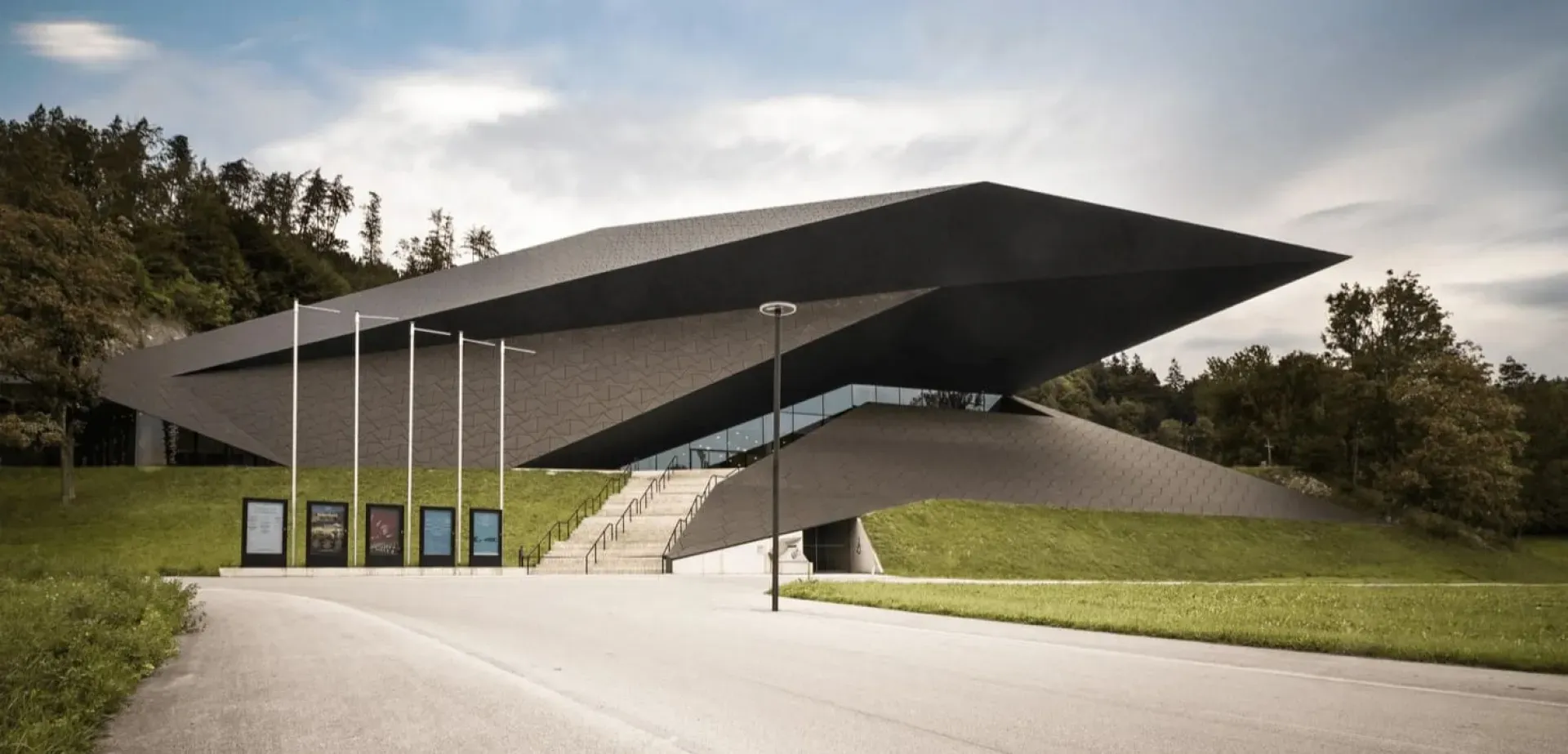
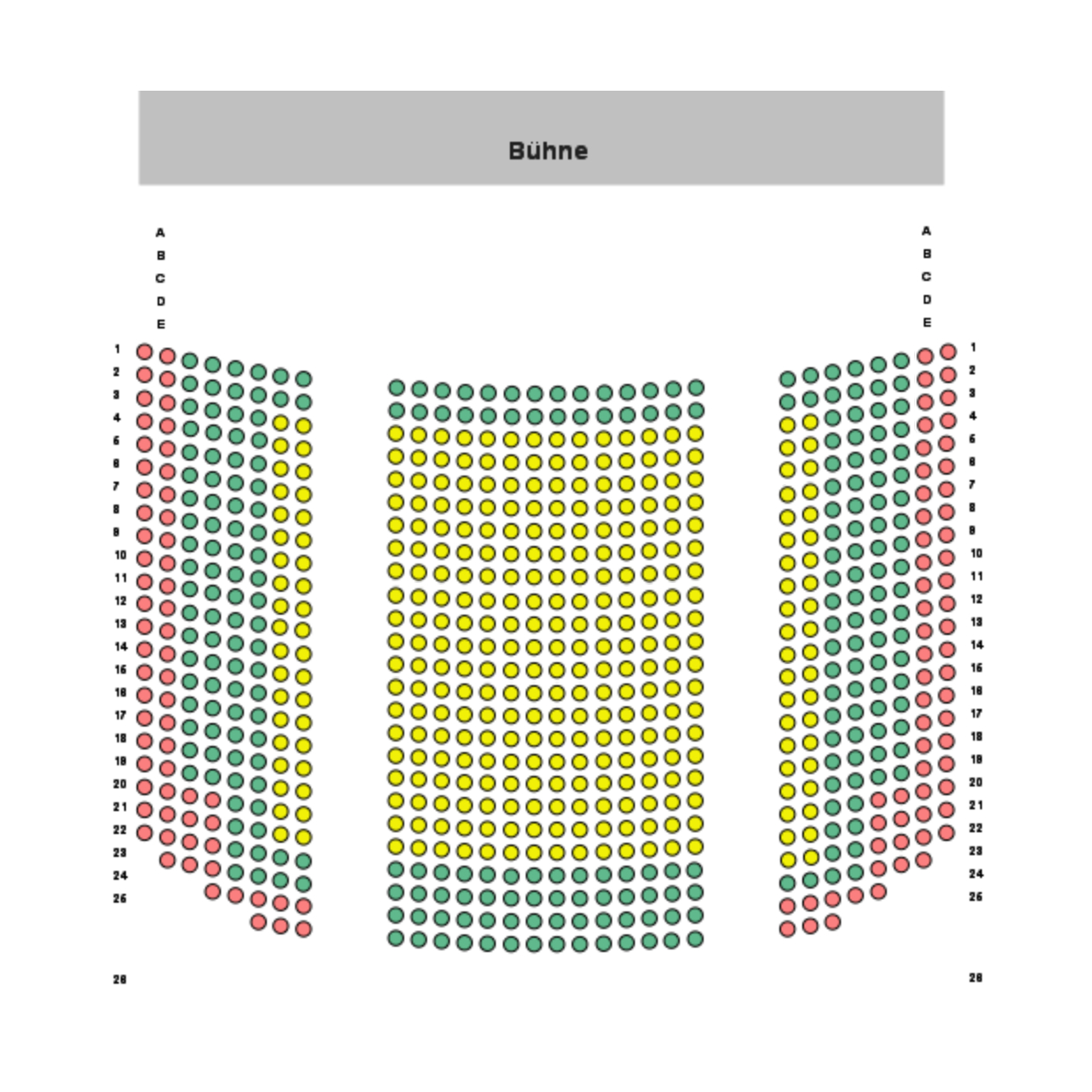
Designed by Delugan Meissl Associated Architects, Vienna, the extraordinary structure boasts 862 seats (130 of which are flexible seats near the orchestra) and the world’s largest orchestra pit (160-sq meters). The total useable surface is 7,000-square meter. General contractor was STRABAG, project manager Ing. Georg Höger.


The new Festspielhaus respects and compliments the architecture of the old Passionsspielhaus and its natural surroundings in a unique way: in the summer, when the Tyrolean Festival Erl or the Passion Plays take place at the white Passionsspielhaus, the dark Festspielhaus will blend with the dark forest, allowing the Passionsspielhaus to be dominant. In the winter it is the other way round: while the white Passionsspielhaus will fade into the surroundings, the dark Festspielhaus will stand out against the white landscape.


The Festspielhaus offers the modern infrastructure that has been sorely missing at the Passionsspielhaus, including a foyer with cloakroom, modern stage machinery, several rehearsal rooms and plenty of space for administrative offices. The Festspielhaus provides the Tyrolean Festival Erl with the basic conditions it needs to ensure the Festival’s success will continue into the future.


Passionsspielhaus

The Passionsspielhaus in Erl, built between 1957 and 159 on plans by architect Robert Schuller, is an architectural and acoustic masterpiece. The structure blends with its surroundings and is a visual extension of the adjoining mountains.
Thanks to its striking shape the Passionspielhaus instantly became Erl’s greatest landmark. Austria’s largest orchestra theater accommodates up to 1500 visitors. The 25-meter wide stage is tiered and provides a spectacular backdrop for the 500 passion play actors as well as the orchestra of the Tyrolean Festival Erl, which performs onstage as there is no orchestra pit.


A café serving snacks and beverages was added in 1997 and an Art Room for 150 visitors was opened in 2003.  
When the Festspielhaus was renovated between October 2006 and April 2007 all sanitary facilities were upgraded; an “orchestra pit” with scissor lift and a substructure for the main stage were added; the auditorium got equipped with a deaf loop system and a new floor; the catwalk, the exterior design, the cellar beneath the donkey ramp, the refreshment stand, all electrical installations and the ventilation system were replaced; and the wardrobe and the stairway renovated.  


YOUR WAY TO ERL


BY CAR

Germany, Eastern Austria
A8 Munich-Salzburg, Autobahndreieck Inntal, A 93, Motorway exit Nussdorf/Brannenburg or Oberaudorf/Niederndorf

Italy, Switzerland, Western Austria
Inntalautobahn A 12, motorway exit Kufstein Nord or Oberaudorf/Niederndorf; from Italy: after Brenner Pass take A 13 and A 12 (approx. 1 h 20 min to Erl); from the Swiss border it’s a 3 hour drive to Erl; the entire journey is on motorways and expressways.

In Austria, the use of motorways and expressways is subject to payment of a toll.

Munich – Erl approx. 1 hour by car
Salzburg – Erl approx. 1 hour by car
Innsbruck – Erl approx. 45 hour by car


BY TRAIN

All long distance and regional trains stop in Kufstein. 


FLIGHTS

Airports

Innsbruck (90 km),
Salzburg (90 km),
München (110 km).


Accomodation

Buy now

Gift vouchers

Gift someone an unforgettable night at the opera.
Choose a gift coupon and let them pick the performance they love—music, drama, and world-class artistry, all in one elegant experience.
Opera Festivals in Europe, Official Programme and Tickets
Instagram
Payment
© 2026 RM EUROPA TICKET GmbH
Whatsapp