Turanda – Antonio Bazzini
General Information
Turanda is an opera in four parts (azione fantastica in quattro parti) composed by Antonio Bazzini with a libretto by Antonio Gazzoletti. It premiered at Teatro alla Scala in Milan on January 13, 1867. The action takes place in Modain on the Tigris, capital of Persia, before 650 CE, under the rule of the last Sassanid kings.
Synopsis
Part I
King Cosroe of Persia introduces his daughter, Turanda. She refuses all marriage proposals and declares that suitors must undergo a test imposed by the supreme magus Ormut. Nadir, an Indian prince, Adelma, Turanda’s confidante, and Gandarte, head of her guard, appear. Themes of freedom and duty emerge.
Part II
The conflicts deepen. Turanda maintains her refusal, while Adelma and Nadir express their feelings and dilemmas. The court, guards, and priests increase the pressure, urging her toward a decision.
Part III
Tension rises. Pretenders and the people become involved. Turanda faces the weight of expectation, while themes of sacrifice and identity dominate. Adelma tries to mediate between Turanda and the suitors.
Part IV
The final resolution comes: Turanda must choose between surrendering to a union or affirming her independence. The opera closes with powerful lyrical moments, reflecting both personal transformation and the fate of the kingdom.
 en
en 
 de
de it
it fr
fr es
es ru
ru jp
jp ro
ro







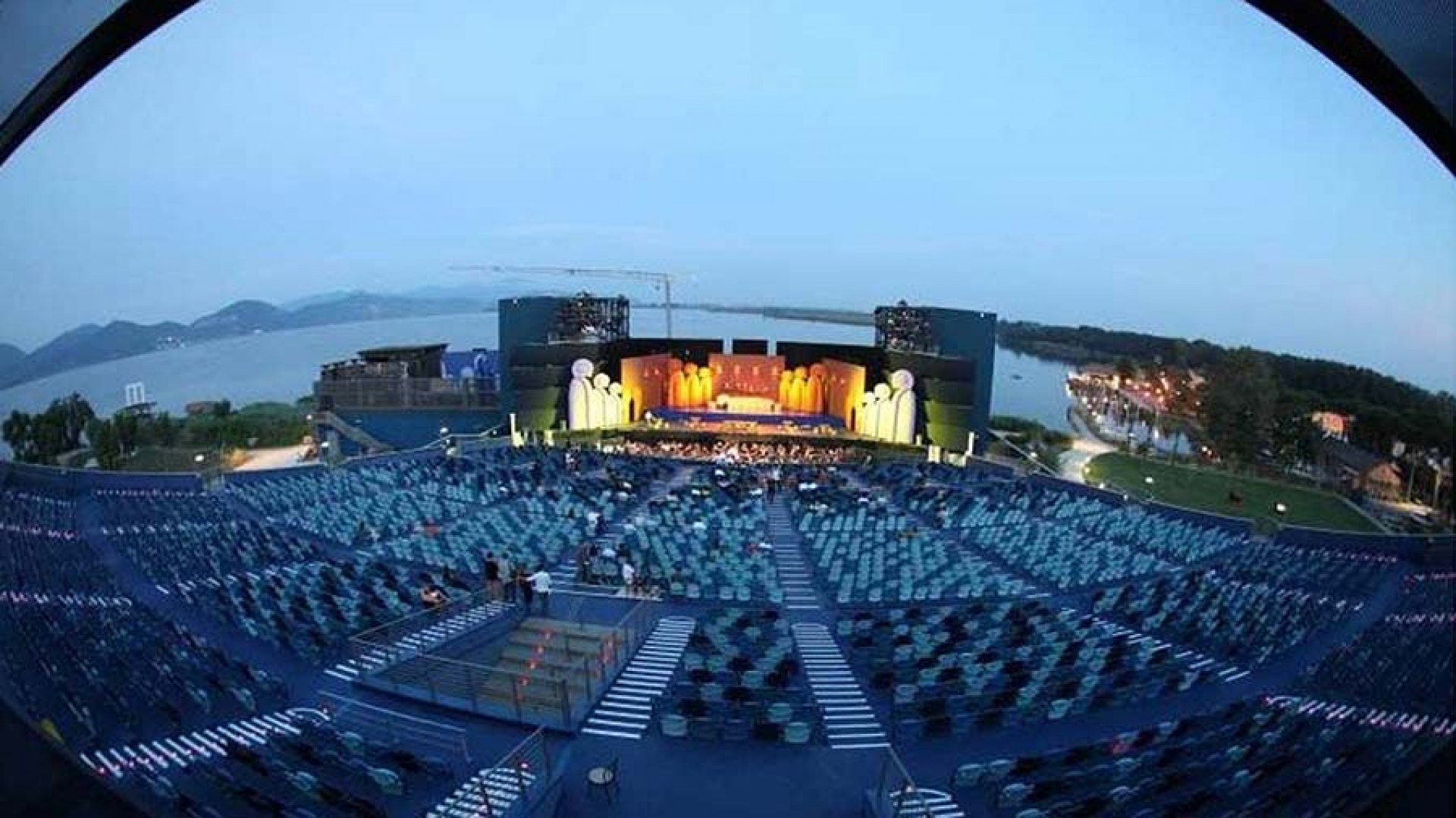
 Torre del Lago Festival Puccini
 Thu 09 Jul 2026



 RM EUROPA TICKET GmbH
 Call now
 Book now