The opera that marked Verdi's turning point in the mid-nineteenth century was Luisa Miller : here, reality appears for the first time in its nuanced and complex immediacy, no longer fleshed out by emblematic situations or characters. Stiffelio is the natural consequence. A story set in recent times, a bourgeois interior that nonetheless hosts the dated figure of a retired soldier tasked with upholding social respectability, the contrast between a woman led astray by emotional turmoil and a man who ultimately overcomes personal and social prejudices. The true theme of this opera, which Francesco Maria Piave modeled in the libretto on the usual French drama of the day—in this case Le Pasteur, ou L'Évangile et le Foyer by Émile Souvestre and Eugène Bourgois—is the protagonist's conflict between the duty to forgive and the ancestral desire for revenge. All the more so since the protagonist is a Protestant pastor who, upon returning from a long journey where he witnessed all manner of sins and urged forgiveness, finds himself discovering that his wife has betrayed him, and that forgiving, when it involves doing it personally and not having others do it, is particularly complicated. He even goes so far as to duel with his rival, only to be foiled by a sudden illness upon hearing a psalm being sung in the distance. So it is her father who hastily eliminates the lover, so as not to let anything leak out that might tarnish the family's good name: the dress rehearsal of Germont. In the end, the pastor's sense of duty prevails when he reads the Gospel story of the adulteress in church and, in front of everyone, forgives his wife, accompanied by vibrant, hieratic music. Verdi was aware of the sensitive nature of the subject, and in fact chose a peripheral theater for the premiere on November 16, 1850, that of Trieste. And besides, broadcasting such a parable to theaters could have seemed like an encouragement to immorality: in fact, the censorship of the Italian (and not only Italian) states was unleashed, changing the setting, text, and title, so much so that Verdi, growing impatient, after six years decided to halt the outrage and further productions, withdrawing the opera from the market. Stiffelio was revived only in the mid-twentieth century, when the theme no longer harmed anyone, appearing from the beginning as a sort of trailblazer for La Traviata , and only in recent years has it carved out an independent role in the process of transformation of Verdi's theater in the mid-nineteenth century.
Giuseppe Martini
Synopsis
Place: Count Stankar's castle and surrounding environs on the banks of the River Salzach, outside of Salzburg, Austria
Time: first half of the 19th century
Act 1
Scene 1: A hall in Count Stankar's castle
Stiffelio, a Protestant minister, is expected to return from a mission. His wife Lina, her father Stankar, the elderly minister Jorg, and Lina's cousins Dorotea and Federico are waiting for him. In addition, there is Raffaele who, unknown to all, is Lina's lover. Stiffelio arrives and recounts a strange story told by Walter the castle boatman (Di qua varcando): eight days earlier, Walter witnessed a man escape from the room of an unidentified woman in the castle by jumping out the window into the river. In his flight, the man dropped a packet of identifying papers, which the boatman recovered and has now given to Stiffelio. Refusing to learn by opening the packet who was involved, he throws the letters into the fire, much to the relief of Lina and Raffaele, the two parties of the incident (Colla cenere disperso). Secretly, Raffaele communicates to Lina that he will leave instructions as where they may next meet in a note placed inside a locked copy of Klopstock's Messiah in the library.
After Stiffelio has been greeted by the local congregation, he and Lina are left alone (Non ha per me un accento – "She has no word for me, not a glance"). He tells her of the sin he has witnessed (Vidi dovunque gemere – "Everywhere I saw virtue groaning and oppressed"), in particular denouncing married women who are unfaithful to their husbands. However, he tells Lina that she reminds him that marital fidelity still exists. Lina, unnerved, asks Stiffelio if he would forgive her if she were unfaithful; Stiffelio says he would not because "forgiveness is easy for an unwounded heart, but hidden within the soul is a treasure which no one can break without being punished". He then notices that her wedding ring, a gift from his deceased mother, is not on her finger. Angrily, he demands to know why (Ah v'appare in fronte scritto – "Ah, clearly written on your brow is the shame that wages war in your heart"), but Stankar arrives to escort him to the celebrations being arranged by his friends. Alone, Lina, filled with remorse, prays to God for forgiveness (A te ascenda, O Dio clemente – "Let my sighs and tears ascend to thee, O merciful God").
Deciding to confess everything to Stiffelio, Lina begins to write to him, but her father enters and grabs the letter, which he reads aloud. Stankar rebukes her (Dite che il fallo a tergere – "Tell him that your heart lacks the strength to wash away your sins") and tells her that if Stiffelio were to discover the truth, then the ensuing despair would kill him. He pressures her to remain silent in order to cover up what she has done and thus preserve appearances and family honor (Ed io pure in faccia agli uomini – "So before the face of mankind I must stifle my anger"). Eventually, Stankar tells her to put on a brave face and hide her grief (Or meco venite – "Come now with me; tears are of no consequence"). Lina reluctantly agrees to remain silent on the matter and the two leave together.
Now Raffaele enters to place the note in the volume of Klopstock's Messiah, as he previously told Lina he was going to. Jorg, hidden, observes this just as Federico arrives to take the volume away, leading him to assume that Raffaele and Federico are collaborating to smuggle letters to an unknown third party.
Scene 2: The banquet hall of Stankar's castle.
A party has been organized to welcome Stiffelio back as the congregants praise him for the love he spreads among the people. Stiffelio enters with Jorg, who tells him he saw a gentleman hiding a note in a locked book. Stiffelio asks who hid the note and Jorg mistakenly points to Federico, who has the copy of Messiah and is now talking to Lina. Stiffelio is lost in thought. Dorotea and Federico ask him what he will preach about in church that evening. He declares that he will preach about Judas and all vile betrayers, seducers who ruin homes for example. He takes the locked book from Federico. Dorotea blurts out that Lina has the key and Stiffelio orders his wife to unlock it. When she refuses, he breaks open the clasp himself and sees the letter. Before he can read it, however, Stankar grabs it and tears it up. Stiffelio is furious with Stankar; Lina begs Stiffelio to strike her but leave her father alone. Stankar tells Raffaele to meet him in the cemetery, while Raffaele pretends indifference. The others wonder what demon invaded Stiffelio's heart to rob them of their serenity.
Act 2
A cemetery near the castle
Lina wanders into the cemetery. She comes across her mother's grave and in desperation once again prays for forgiveness (Ah dagli scanni eterei – "Ah, from among the ethereal thrones, where, blessed, you take your seat"), but Raffaele, having followed her, arrives. She demands that he return her wedding ring and her letters, which he had taken, and then immediately asks him to leave forever (Perder dunque voi volete – "Then you wish to destroy this unhappy, betrayed wretch"). However, Raffaele refuses to leave (Io resto – "I stay").
Stankar arrives, demands that his daughter leave, and challenges Raffaele to a duel. Raffaele initially refuses to fight, but ends up accepting the challenge after Stankar threatens to tell everyone that Raffaele is actually a bastard child, not a Count as he claims. Stiffelio arrives and rebukes them for fighting in a cemetery. There is an attempt at conciliation whereby the minister takes Raffaele's hand with the intention to also take Stankar's and have them shake hands. However, Stankar reveals that Stiffelio has touched the hand of the man who betrayed him! Not quite understanding at first, Stiffelio demands that the mystery be solved. As Lina returns asking her husband to forgive her, Stiffelio begins to comprehend the situation (Ah, no! È impossibile! – "No! It cannot be!").
Enraged and devastated, Stiffelio challenges Raffaele to a duel, but Raffaele refuses. Stiffelio as such decides to simply kill him instead, but as he is about to strike Raffaele, Jorg arrives to summon Stiffelio to the church. Inside the church, the congregation sings a hymn asking for forgiveness, which torments Stiffelio. Filled with conflicting emotions, Stiffelio drops his sword and asks God to inspire his speech to his parishioners, but almost immediately thereafter declares that he can never forgive his wife and curses her. Jorg reminds him that Christ forgave all humanity from the cross; Stiffelio, overwhelmed, faints.
Act 3
Scene 1: A room in Count Stankar's castle, the next morning
Alone, Stankar reads a letter he has intercepted, in which Raffaele tells Lina that he is fleeing the area and asks her to follow him. He is in despair over his daughter's behavior (Lina pensai che un angelo in te mi desse il cielo – "Lina, I thought that in you heaven gave me an angel"). For a moment, he resolves to kill himself and begins to write a letter to Stiffelio. But Jorg enters to give him the news that he has tracked down Raffaele, who will be returning to the castle. Stankar rejoices (O gioia inesprimibile, che questo core inondi! – "Oh, the inexpressible joy that floods this heart of mine!"), as he sees revenge being within reach. He leaves.
Stiffelio confronts Raffaele and asks him what he would do if Lina were free, offering him a choice between "a guilty freedom" and "the future of the woman you have ruined". Raffaele does not respond, and the minister tells him to listen to his encounter with Lina from the other room.
Once Lina arrives, Stiffelio tells her that they must separate—he says he will leave and continue his ministry and suggests to Lina that she marry Raffaele in order to redeem her honor—and presents her with divorce papers (Opposto è il calle che in avvenire – "Opposite are the paths that our lives will follow in the future"). Lina, shocked, initially indignantly refuses ("I will die for your love"), but when Stiffelio accuses her of trying to emotionally manipulate him, she signs the papers in an attempt to prove her sincerity: as her husband, he could refuse to listen to her, but as a minister with nothing else between them, he cannot, and she wants nothing more than to have him hear the full truth. Thus appealing to Stiffelio more as a minister than as a husband, Lina confesses that she has always loved him and she still does. When Stiffelio asks her what happened with Raffaele, she tells him that Raffaele betrayed her. Stankar enters to announce that he has killed Raffaele. Jorg tries to convince Stiffelio to come to the church service (Ah sì, voliamo al tempio – "Ah, yes, let us flee to the church").
Scene 2: A church
The congregation gathers for services, singing the same hymn of forgiveness that they sang at the end of Act II. Meanwhile, Lina and Stankar pray for forgiveness for their respective sins of adultery and murder. Jorg tells Stiffelio, who is not convinced that he has the emotional fortitude or focus of mind to deliver a sermon after the events of the last 24 hours, to open the Bible to a random page and let God inspire him. Stiffelio mounts the pulpit and opens the Bible to the story of the adulterous woman (John 7:53–8:11). After reading the passage with which Jesus forgives the adulterous woman, Stiffelio in his turn forgives Lina ("Perdonata, perdonata, perdonata! Iddio lo pronunziò!"—"Forgiven, forgiven, forgiven! God has pronounced it!").
 en

 de
 it
 fr
 es
 ru
 jp
 ro



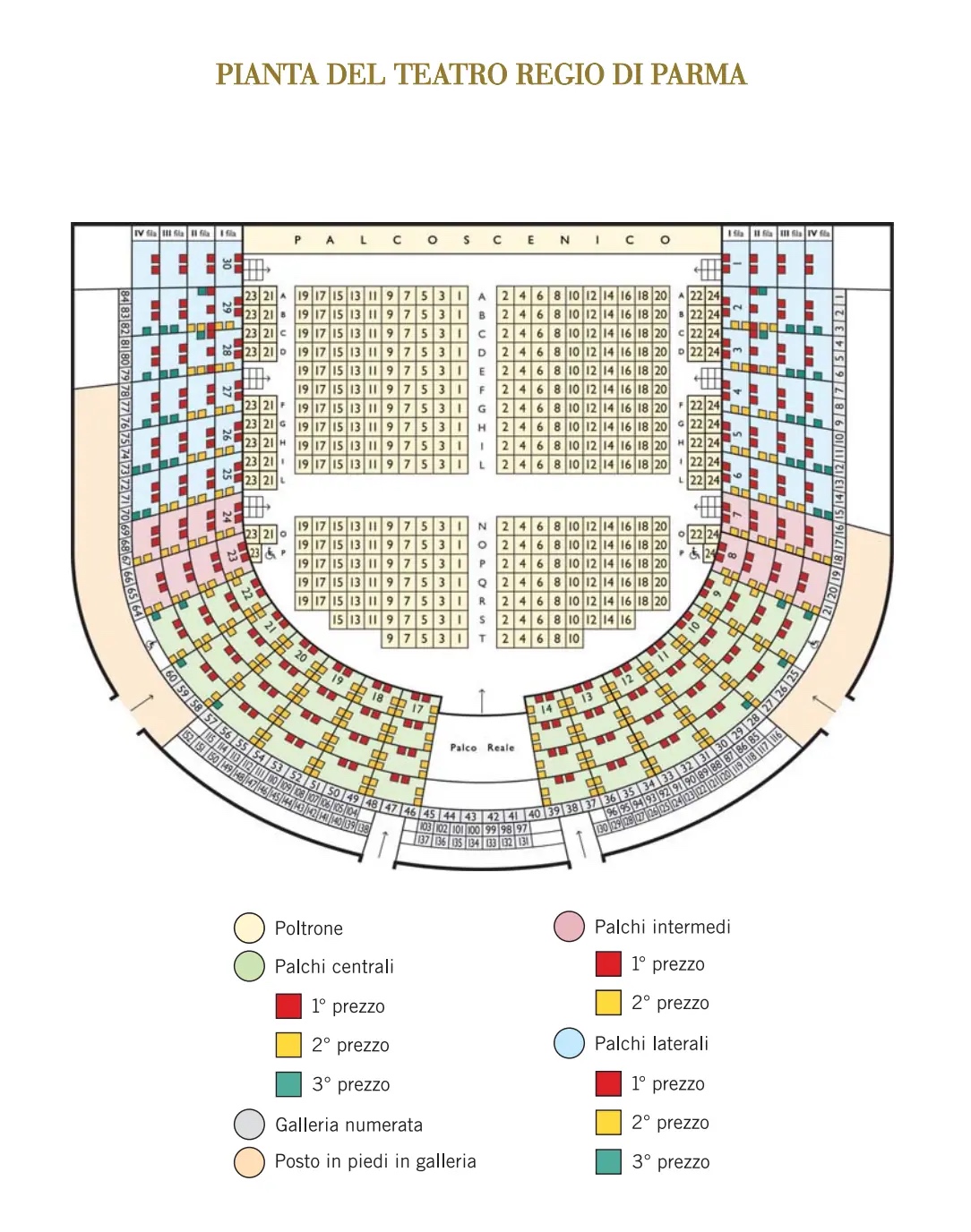
 Teatro Regio di Parma
 Thu 07 Oct 2027 - Sat 23 Oct 2027



 RM EUROPA TICKET GmbH
 Call now
 Book now