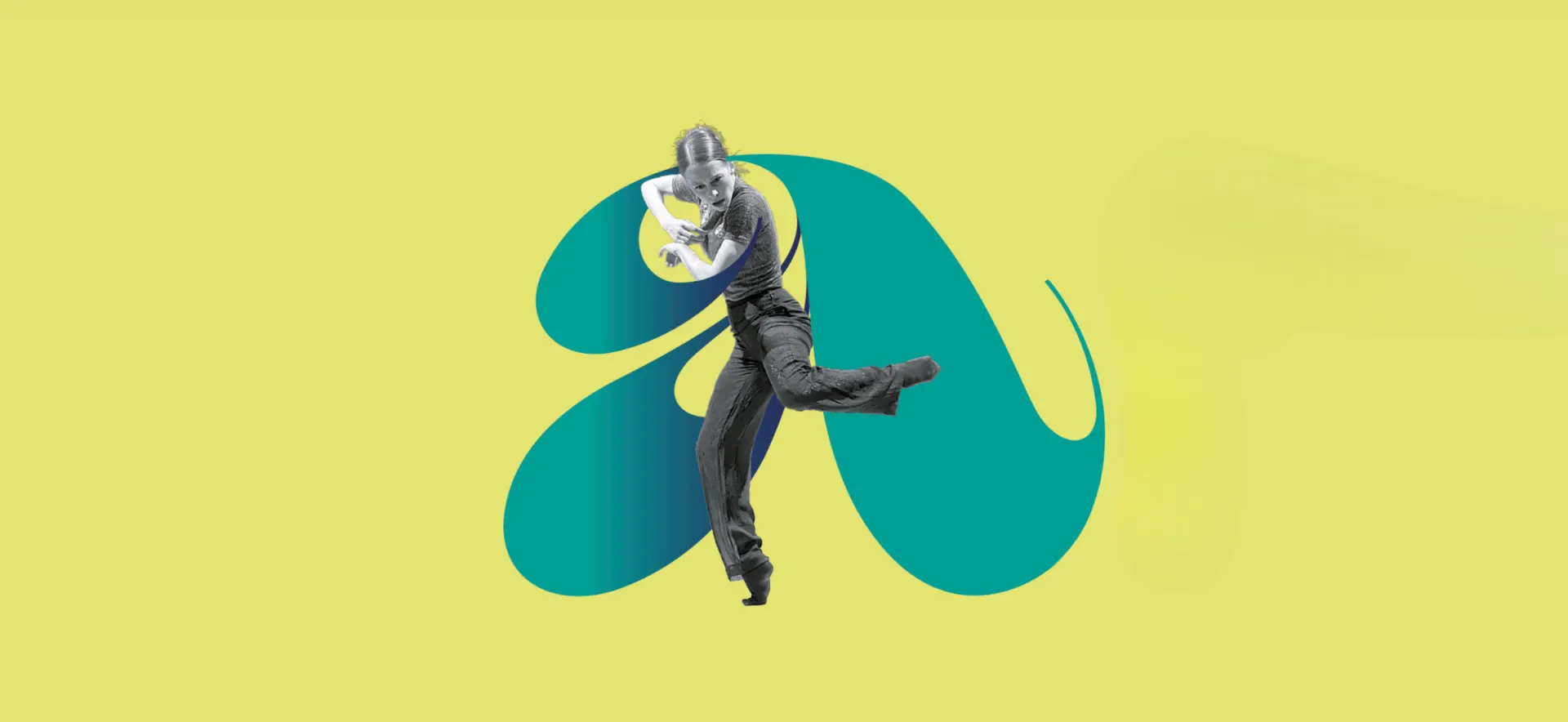
Ceneri
“What begins as a collective celebration gradually transforms into a ceremony of farewell. Some bodies are removed, veiled and symbolically buried by those who remain. Ash and water fall upon them in a gesture that hovers between punishment, mourning and blessing. Throughout history, communities have built rituals to honour their dead and keep their memory alive. To bury, cover, wash or keep vigil over a body has never been merely an act of leave-taking, but also a way of acknowledging that individual existence lives on within a shared history. The dead remain among the living through remembrance, through stories held in common and through the gestures a community chooses to preserve. In Ceneri, ash speaks at once of disappearance and of permanence. It is what remains after the passage of time, but also the material trace of a life that refuses to vanish entirely. Water, by contrast, operates as an element of transition and transformation: it purifies, accompanies, blesses and enables the passage from one state to another. Together, ash and water turn the scene into an ambiguous rite, one in which we cannot tell whether we are witnessing an expulsion, a funeral or a collective act of love. Dance, word, music and the force of the chorus transform the stage into a space of political and emotional confrontation. As in Pasolini, the ashes are not merely the residue of something that has passed. They are the persistent trace of a question that continues to accompany us. The most contemporary image in the work is not simply that of a community immunising itself against the other, but of a generation desperately seeking to belong to something whilst fearing the loss of what makes it singular. In this tension, Gramsci, Pasolini and our own present converge.” Marcos Morau
Marcos Morau and the Centro Coreografico Nazionale / Aterballetto share an ongoing space for artistic, poetic, and social research. This collaboration grows from the common desire to explore key ideas from Italian culture, philosophy, and art, providing space to the dynamic and inquisitive artistry of Morau without being based on fixed residencies or formal structures. This new work reflects both the sense of a society that seems increasingly fragmented and the importance of remembering the depth and relevance of Italian artistic thought. After engaging with the work and figure of Ennio Morricone, Morau now turns to Pier Paolo Pasolini, another major figure whose ideas still resonate strongly today. While Notte Morricone was centred on Morricone himself, Ceneri shifts the focus to the present moment. Rather than portraying Pasolini as a person, the piece begins from his words, using them to reflect on how his thinking continues to speak to our time. This project also responds to a broader need: to look more closely at the world around us, from everyday urban reality to the imaginative space of art. It invites reflection on a question that is often missing from public debate today – the role of culture in shaping how we think, behave, and live together, both as individuals and as a community.
DOPPIOGIOCO
“Inside a black box, the space is cut through by beams of white light: a ring, a court, a boundary that claims to define who we are. Two identical hoops stand still, like sentinels, symbols of conquest and failure, targets that glow or fade depending on who is looking. Everything is set, yet nothing is stable: the game could begin at any moment, even when no one is truly ready. Bodies enter the stage, they recognize one another, they grow wary, they split into teams without knowing why, they form alliances by instinct, they betray each other out of necessity. Every gesture is a test, vibrating like a premonition. Every step could either be calculation or hesitation. The warm-up does not prepare, it exposes; tensions, suspicions, the silence before the break. We see the ball at the center of the stage. Weight, promise, threat. When it hits the ground, it does not simply bounce, it detonates. A small explosion that cracks the surface, the breath, the relationships between bodies. Every pass is a risk, every shot a confession. One relies on the other instinctively or strikes with the precision of a necessary act. Protection and harm emerge with the same energy. Goal attempts are taken in the dark, cutting through the air like prayers or challenges thrown into the void. The one who shoots cannot know whether they will hit the target or only the memory of an intention. In that suspended moment, everyone holds their breath. What matters is not the score, but the courage not to look, to let go of what cannot be controlled. Afterwards, the group bursts apart, collapses inward, devours itself, supports itself. One against all. All against one. Crowd against solitude and solitude that sometimes cries louder than the crowd. Rules exist only to be broken. The ring is a cage only for those who do not dare to cross it. Bodies push, lift, block one another, as in everyday life, where love and competition inhabit the same gesture. And then, suddenly, without warning, the bodies fall into sync. The two teams dissolve and reform into a single breathing organism. It is a fragile and absolute moment. The geometry of the court becomes a guide, no longer a barrier. Conflict turns into dance, struggle becomes listening. There is no victory to pursue, only a sudden balance, as precious as a truce. Then chaos returns, because it is part of our nature. Alliances break apart again. The ball’s trajectory fractures in the air, multiplying like doubts, like attempts. Balls fall one after another, slow-motion explosions telling the story of what has been lost and what might still happen.” Philippe Kratz
DOPPIOGIOCO is a choreographic work with eight performers on stage, set on a basketball court transformed into a performance space. The stage is defined by a black floor marked with white lines outlining the court, with a basketball and two hoops as the only scenic elements. The piece is driven by a strong musical duality, where contemporary classical music intersects and blends with hip hop. Drawing from athletic movement, the choreography reworks it into a physical and relational language, generating constantly shifting dynamics between group and duet, between competition, alliance and fragmentation.
 en

 de
 it
 fr
 es
 ru
 jp
 ro


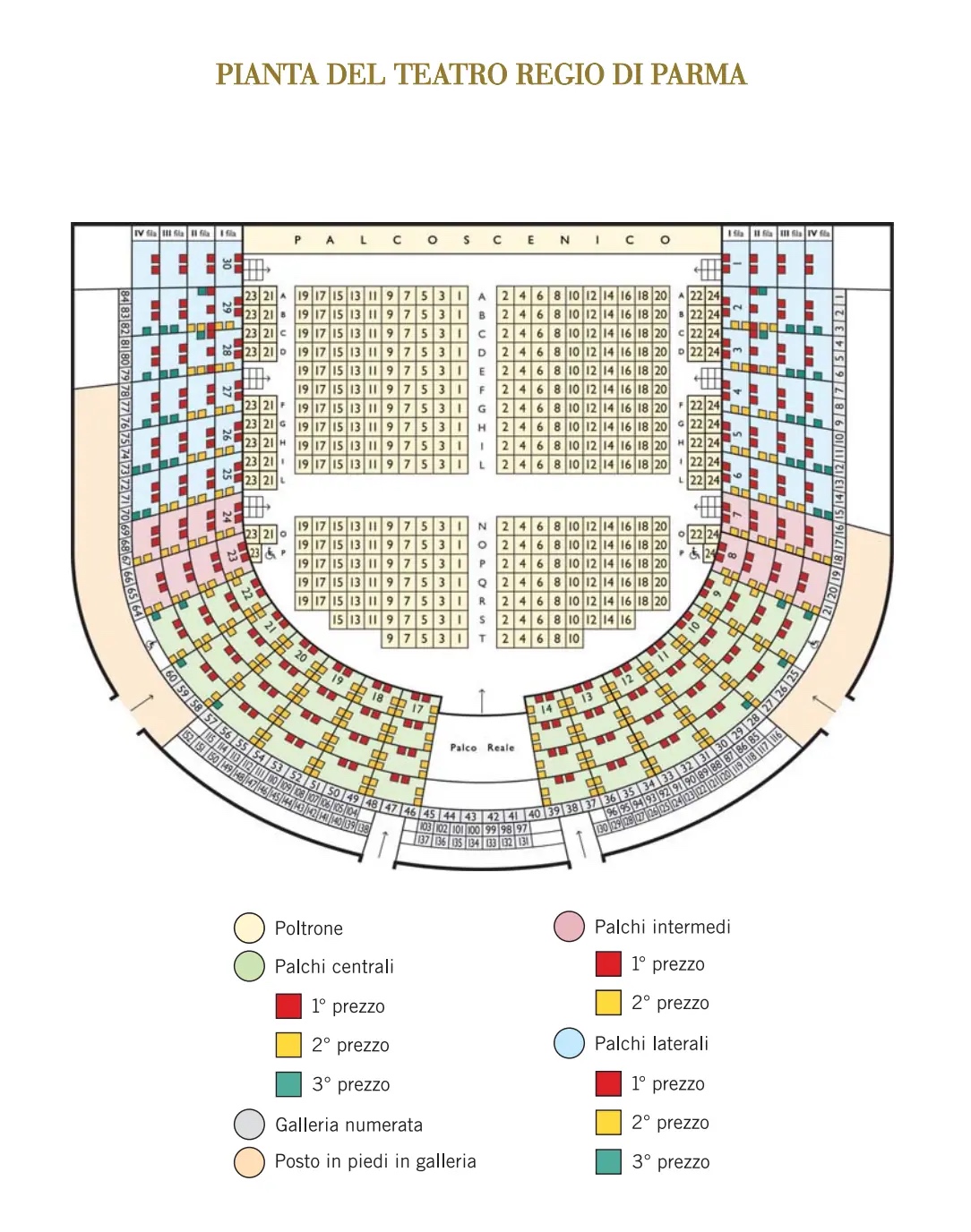
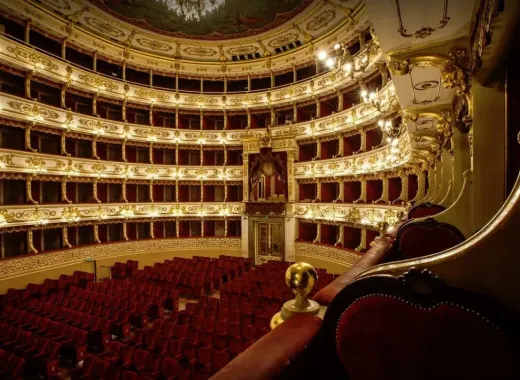
 Teatro Regio di Parma
 Fri 30 Apr 2027



 RM EUROPA TICKET GmbH
 Call now
 Book now